“Code was never the hard part” is an insult to all programmers
SENKO.NET
A strong title like that is certainly going to attract my attention and make me want to read the blog post!
As coding agents start churning out 1,000s of lines of pretty decent code, why isn’t the overall output of our industry increasing by orders of magnitude? You’ll almost certainly have heard the mantra that “code was never the hard part” as one of the justifications for this dichotomy; in other words, the bottlenecks in our software pipeline were always elsewhere. And yes, I’ve used that simple phrase a number of times myself.
The blog opens with a pretty robust pushback against this “code is easy” mantra, and then knocks down the “figuring out what to build is the hard part” argument too for good measure. The author makes some good points throughout. The post closes with a more pragmatic and balanced view, acknowledging the significant changes in our industry, and the need to adapt to thrive.
So, is the statement “Code was never the hard part” wrong? No, I don’t think it is, as long as you view it from an organisational perspective. However, if you interpret this as an observation about the skill required for a specific role within a software organisation, yes that is insulting and just plain wrong.
What’s the best programming language for coding agents?
DANLUU.COM
Language choice has always been driven by human preferences and taste, or, in a commercial setting, the preferences of those who created the product before us. However, as agents increasingly write more of our code, perhaps we should be considering which programming language is best for agents? But how to determine which is best for an agent?
A simplistic approach is token efficiency, which languages can express the same logic with fewer tokens. This technique suggests dynamic languages are more efficient, but lacks genuine evidence.
This post provides a more methodical assessment, using various languages to tackle complex software problems, comparing the results based on correctness, generation cost, and wall-clock time. The results indicate no clear benefit with dynamic languages. It does find a weak-to-moderate correlation between language popularity (on GitHub) and agent performance, with popular languages producing solutions that were more correct, cheaper, and faster.
This result isn’t entirely surprising, and a plausible explanation for this correlation is that more popular languages will feature more heavily in the model training dataset, giving it more examples to learn from.
While the result isn’t surprising, I applaud the thorough methodology.
Why Go is an Ideal Language for AI-Assisted Software Engineering
GOOGLEBLOG.COM
And staying on the subject of programming language choice … Google, are pitching Go, the language they developed, for AI development.
Google makes an interesting argument that AI changes what we should value in a programming language. When AI can generate hundreds of lines of code almost instantly, the bottleneck shifts from writing code to reviewing and verifying it. This is a very different argument to the previous article, which was focussing on how easy it is for AI to write code in a given language.
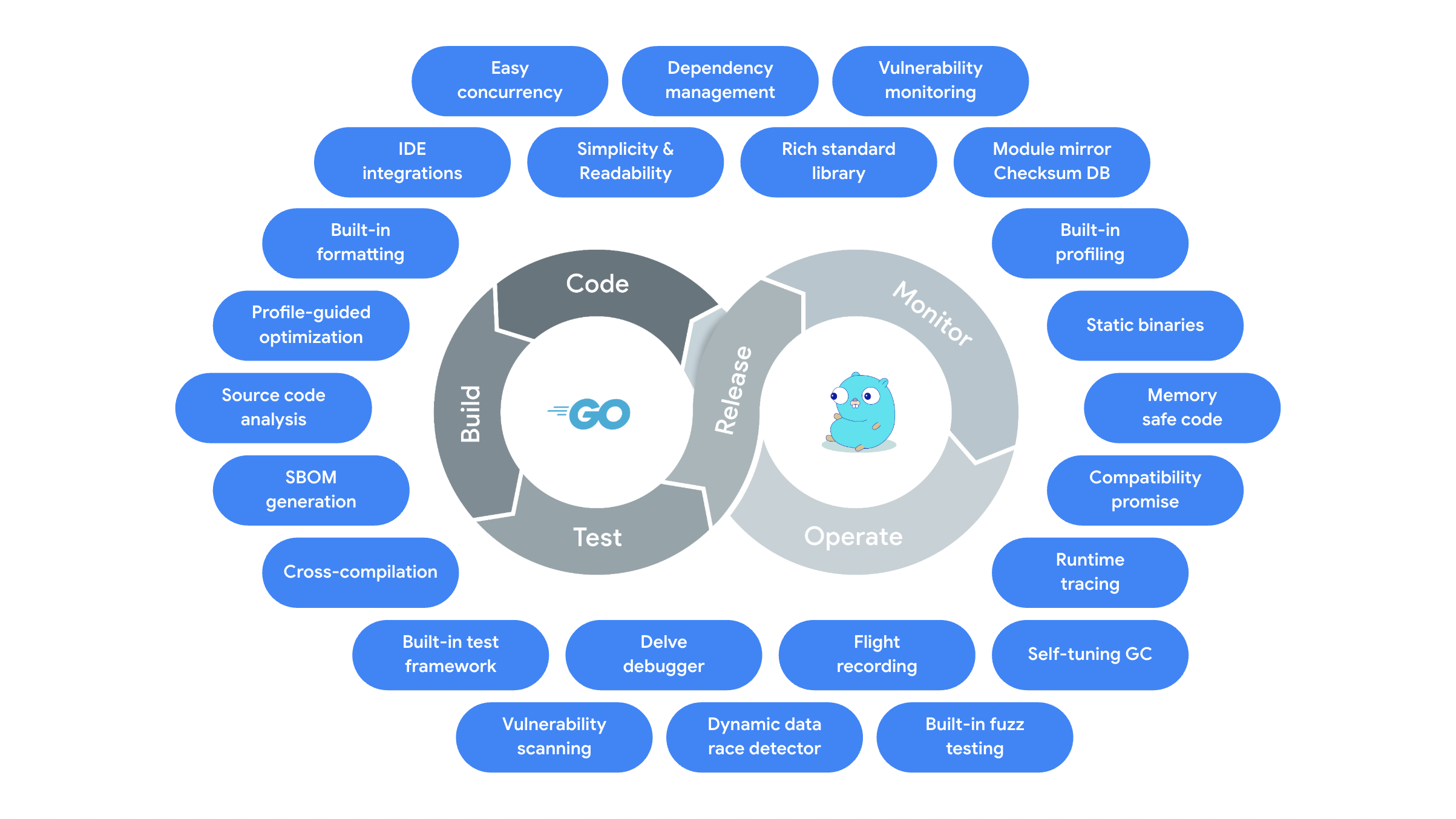
Historically language design has predominantly been based on how easy it is to write code with them, and we have favoured ever-more expressive languages. But if generating code becomes effectively free while understanding and maintaining it remains expensive, those economics change. In future perhaps the best languages will be those where machine-generated code is easiest to read, verify and validate?
AI is removing the middle class of software engineering
FLORIANHERRENGT.COM
This blog post starts with a simple story, of an engineering lead, whose job is to keep a codebase in working order* reviewing changes and basically keeping everything in check. However, when they return from holiday, everything is a mess, while they were away all havoc broke loose. A familiar tale.
However, with the productivity boost that AI introduces, if left unchecked, means every day is like coming back from a two week holiday!
“AI makes projects with weak engineering culture fail much faster.”
The author’s broader argument is that AI will polarise software engineering. The best engineers become dramatically more productive because they can use AI to multiply their output while still providing judgement, architecture and oversight.
Meanwhile, engineers whose main contribution is turning specifications into code become much less productive because AI can already do much of that work. The result may be a smaller number of highly trusted engineers producing more software, with the middle of the profession squeezed out.
We may see a similar effect playing out in other knowledge work industries in the near future too.
Model Releases
Regular readers of this newsletter will know that I don’t typically give model releases much coverage. My reason for this is my feeling that the models (tools and harnesses) are already so fantastically capable, that we need to spend our time working out teh best way to use them, rather than eagerly watching benchmark scores to see which model is today’s top performer.
However, this week seems to have seen an unusually high number of releases, including:
- Meta Muse Glimmer: Meta released an open-weight 30B multimodal agent model that can run on a consumer GPU and is designed for coding, tool use and interactive application development.
- OpenAI GPT-5.6-Cyber: OpenAI introduced a restricted-access specialist model for vulnerability research, exploit validation and authorised defensive security testing.
- NVIDIA Nemotron 3.5 Lightning: NVIDIA launched a fast, open-weight mixture-of-experts model intended to execute specialised tasks inside high-volume, long-running agent systems.
- xAI Grok 4.6: xAI’s new flagship model featuring multi-step coding, technical research and the generation of complete visual applications.
- Alibaba Qwen3.8-2.4T-A95B: Alibaba published the first downloadable Max-class Qwen checkpoint, giving developers access to a large open-weight model suited to coding and agentic workloads.
- DeepSeek V4-Pro: DeepSeek moved its flagship model into general availability with a one-million-token context window, adjustable reasoning and built-in tool calling.
- Google Gemini 3.7 Flash: Google launched a faster, lower-cost model focused on software engineering, web development and production agent workflows.
- Z.ai GLM-5.3: Z.ai introduced a model with expanded post-training for long-horizon coding tasks, initially available through its API.
And we haven’t quite reached the end of the week yet!