How Claude’s text watermark works
ANTHROPIC.COM
Last week Anthropic announced that they would be implementing watermarking, in order to comply with the EU AI Act, a relatively stringent and legally binding set of rules that promote safer AI usage. The Act indicates that all synthetic or AI-generated content must be identifiable and detectable, with watermarks allowing for such identification.
Anthropic claim that their watermarking algorithm doesn’t impact the quality of the output, and will not be distinguishable to human readers. This post provides some transparency on the implementation method, which for text watermarking applies an imperceptible bias when selecting the next token, if there are multiple options of roughly equivalent probability. For example “the rain was lashing it down” and “the rain was pelting it down” are semantically near identical, but which of two semantically equivalent words are chosen can be used to encode a watermark.
Given the structured nature of code, there is less variability and scope for watermarking, as this post outlines. However, the models do attempt to watermark code. How effective this is hasn’t been disclosed.
Although this measure is based on good intentions - to fight AI slop and misinformation - its implementation has numerous flaws:
- This is an EU law; however, Anthropic have applied it globally
- It doesn’t differentiate between AI-authored text, or human-authored text with light-touch AI edits
- The watermark detection algorithm is proprietary and hidden
- And finally … it is trivially easy to remove with post-processing
Much of the above will have little impact on those of us who primarily use Claude for authoring code, but it is a further dent in Anthropic’s reputation, which was riding high at the beginning of the year.
Conservationist Who Turned 40 Terabytes of Public Data Into a Video Game
EXE.DEV
Firstly, this is a blog post by a product company, which naturally promotes their product - however, it is a truly great story.
Raffael is a technically minded conservationist, but isn’t a programmer. His job relies on the vast quantities of open data that governments publish, but aggregating this meaningfully is a complicated task, so people often resort to spreadsheets for this type of grind. Making use of the exe.dev platform, he was able to create a dedicated app, pulling together data on fires, deforestation, settlements and ranger movements, allowing a better understanding of what’s actually happening on the ground. He has gone further still, creating a Settlers-style game backed with real-world data.
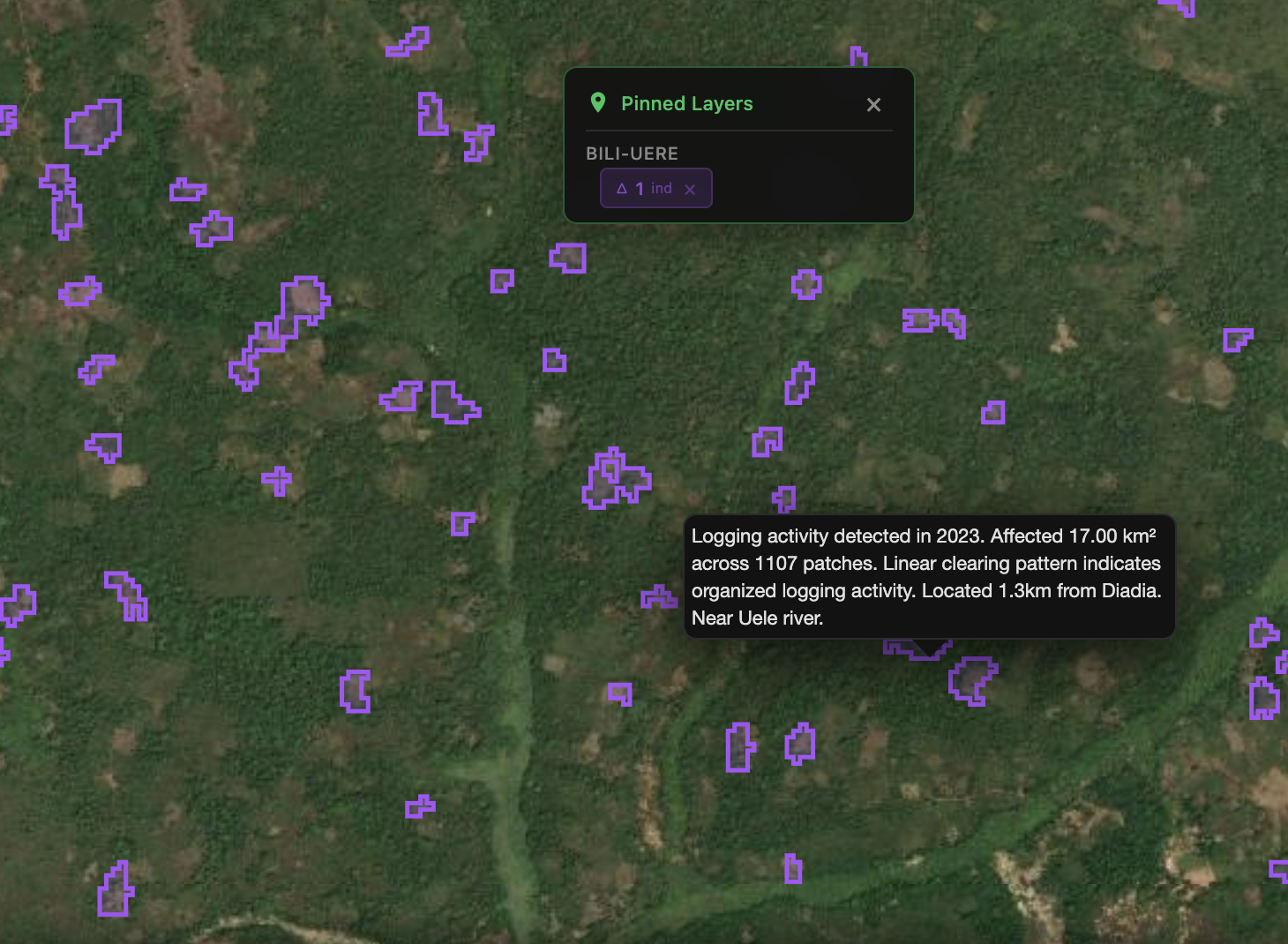
Many seasoned developers, myself included, can be a little dismissive of vibe coding. However, for people like Raffael - technically minded, but lacking any budget or time to learn programming - it can be a life-changer.
Extensible Software in the age of LLMs
JEREMYMORRELL.DEV
Jeremy argues that modern software is “static”, with a collection of features that were prioritised by the developer, based on their limited time and preferences. Adding every feature requested by every user would undoubtedly result in an unusable mess. However, coding agents change this dynamic.
There is a growing “software for one” trend, similar to the post above, where people are building exactly the app they want, just for themselves. While these coding agents, and a whole host of dedicated app-builder platforms, make it easy to build personal applications, deploying, securing, and sharing that software is still far more complicated than creating it.
This post describes a high-level architecture for an AI-native extensible software platform, where non-technical users can use agents to create scripts (e.g. custom workflows, parsers, dashboards), that run in a safe sandboxed environment. Interestingly, Salesforce is already this type of platform, minus the AI and with a rather dated implementation!
fx: Tiny, open, native coding agent
FX.SH
fx is an open source, model-agnostic, CLI-based coding agent, written in Zig (yes, the language that Bun used to be written in). It has a focus on minimalism and performance, shipping as a tiny 6MB binary, and boasting cold start times of 10µs.
There is a lot of activity in the ever-expanding coding-agent-harness space, which is great to see. Although one Hacker News commenter noted that while fx may be tiny, Hax is minuscule, coming in at just 0.6MB!
Mathematics in the age of AI
ARXIV.ORG
This is quite a long essay, but you can also watch Tao present on this topic at the ICM 2026 conference if you prefer.
Mathematics is a field that is experiencing the same turmoil as software engineering, with AI now able to successfully tackle incredibly difficult maths problems. In this essay, Tao ponders the quite fundamental question “what the goals and values of mathematical research actually are.”
He tackles this question via a simple component of mathematics, that of problem solving - where the goal could simplistically be stated as “Solve as many unsolved problems as possible”. However, he argues, with a great many examples, that there is so much more to problem solving than this simple statement, building to an elaborated goal of “Solve unsolved problems, verify them to be correct, ensure they are clearly communicated, and have them digested, accepted, and incorporated into the definitive theory of the field.”
While this essay is all about mathematics, the parallels to our field are quite clear. The simple framing of software engineering is just “writing code to perform a task”, which AI is now rather good at. However, much like Tao’s example on the topic of problem solving, there is so much more to our field than just writing code.