AI coding has made CI a bottleneck, so we reworked ours to keep up
LINEAR.APP
Linear is a relatively new, lightweight and popular project management and issue tracking tool. They have a famously small (just 25 engineers), high-leverage engineering team who are on the cutting edge of adopting AI, and more importantly adapting their ways of working around this technology.
When you accelerate the creation of software through the use of AI, you almost always create bottlenecks elsewhere - in this case, the bottleneck the team were focussed on was the CI platform. This is a common problem, and many organisations are finding that their CI is grinding to a halt under the additional load.
This blog post shares a few of the worthwhile improvements that they made; modernising their tooling, simplifying linting checks, improved logic around job dependencies, reducing repeated setup tasks and more. A useful collection of ideas that are worth considering in your own CI pipelines. However, it is worth noting that in many organisations humans, and the need to have them review code, is the more critical bottleneck at the moment.
Introducing Strands harness: frontier performance with 28% lower token cost
STRANDSAGENTS.COM
Your coding agent is composed of two main building blocks: the Large Language Model (LLM), which is often hosted remotely and accessed through an API. This is where the ‘intelligence’ lives, with the LLM reasoning about problems and ultimately writing code. The other significant building block which turns a model into an agent is your harness, for example Claude Code. The harness allows the model to take actions on your local machine, and is also its gateway to other services (web search, MCP etc).
While all frontier labs provide both the model and the harness, there are open source alternatives for the harness, with OpenCode and Pi probably the most well known. This blog post announces the release of another open source harness, that has gained 13k GitHub stars, with a headline pitch that it reduces token cost - capitalising on the current cost conscious trend.
If you are using a model from a frontier lab, I struggle to see why you would use anything other than their native harness. This vertical integration gives them the opportunity to train and optimise the model for their own harness. However, if you are using an open weights model, you will likely need an open source harness in order to create your agent set up.
My feeling is that the relevance and value of open source harnesses is almost entirely coupled to the future of open weights models. If they continue to grow in relevance and usage, the open source harness ecosystem will likely continue to thrive.
Introducing Claude Opus 5.5
ANTHROPIC.COM
It has been another busy week for model releases, with Grok 4.7 (an upgrade focused on coding and knowledge work) released on Monday, followed by two OpenAI model releases (GPT-6 Sol and Luna) and Claude Opus 5.5 the very next day. While Sol is positioned as a general-purpose workhorse, and Grok 4.7 is optimised for cost, Opus 5.5 is the one most squarely targeted at pushing the frontier forwards, with significant leaps forward in various coding benchmarks (Terminal-Bench, FrontierCode, CursorBench). It has once again claimed the top spot on the Artificial Analysis ‘intelligence’ charts, by a significant margin, beating the next closest model by 5%.
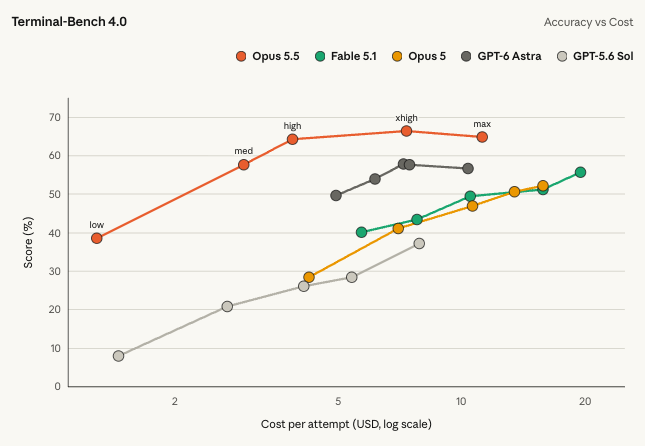
The response to this model has been generally very positive; as ever, the benchmark scores are a useful starting point, but the real world experiences are much more informative. Early reports have indicated that it is less verbose and more focussed, which also results in fewer tokens being consumed for a given task. It is basically a better all-round engineer, less likely to touch code that it shouldn’t, talks less, and achieves task completion in fewer steps.
Anthropic have also put a lot of effort into improving this model’s overall writing capability. The usual AI ‘tells’, including em dashes, and overly dramatic phrasing, have been significantly minimised.
In all honesty, I am a little uneasy about this release. It seems like some of the biggest improvements relate to the hard-to-define concept of simply being a better engineer. I do wonder how much further these tools are going to encroach on what we consider to be our day job, and our individual (and human) contributions to the software that we build.